Your Next Job Move Starts with a Perfect Resume Template
Let’s be honest, staring at a blank page when you need to write a resume is one of the most frustrating parts of a job search. You have the skills, the experience, and the drive, but translating that into a clean, professional document that actually gets noticed? That’s a different challenge entirely. It’s not just about listing jobs; it’s about presenting your professional story with clarity and confidence. This is where having the right design asset makes all the difference. A thoughtfully crafted Professional Resume CV Template isn’t just a pre-made layout; it’s a strategic tool that handles the heavy lifting of design and formatting, so you can focus on what matters most: your qualifications.
More Than Just Paper: The Anatomy of a Standout Template
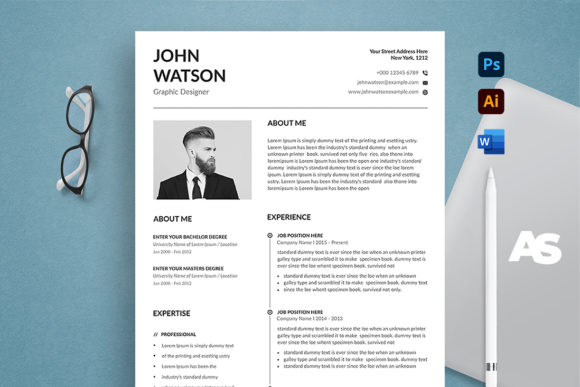
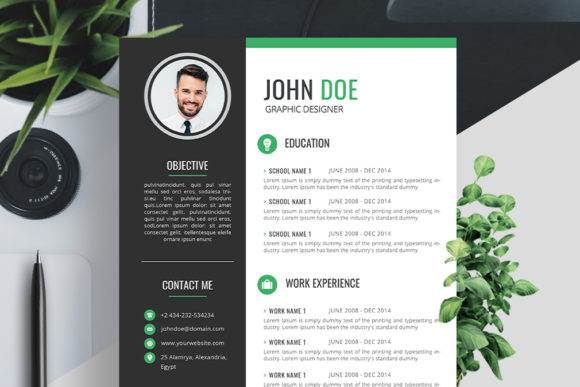
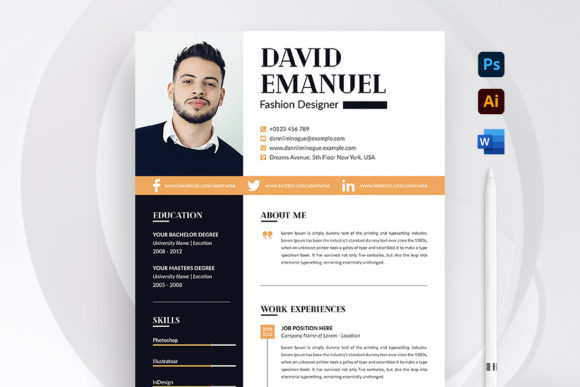
So, what does a perfect resume template actually look like? It’s a blend of professionalism and personality, designed to guide the recruiter’s eye effortlessly. Think clean lines, ample white space, and a deliberate visual hierarchy. A strong template uses typography not just to display text, but to create structure. Your name might be set in a bold, modern typeface to grab attention, while your section headings use a clean sans serif font for clarity. The body text, however, needs to be supremely readable—often a classic serif font that feels professional and is easy on the eyes over long paragraphs.
This particular Professional Resume CV Template is built with this principle in mind. Its visual character is one of organized sophistication. The layout is meticulously balanced, ensuring that even dense information feels accessible. It’s not overly decorative or trendy; instead, it leans into timeless design principles that convey competence and attention to detail. The personality it projects is one of a candidate who is prepared, organized, and values quality—exactly the impression you want to make before you even walk into the interview room.
From Digital Portfolios to Print-Ready Applications
The true power of a versatile template lies in its adaptability across different formats and contexts. A resume today isn’t just a printed sheet of paper. It lives as a PDF in an email attachment, a document uploaded to an Applicant Tracking System (ATS), and sometimes even as a page in your online portfolio. A well-designed template, like this one, is engineered for all these scenarios. Its A4 paper size with bleed settings and 300 DPI CMYK color readiness means it transitions seamlessly from your screen to a high-quality printout without any last-minute formatting disasters.
This adaptability extends to the tools you use. The inclusion of both Microsoft Word (.docx) and Adobe Photoshop (.psd) files is a game-changer. For most professionals, editing in Word is the fastest way to tailor your resume for each application. You can swap out keywords, adjust bullet points, and update dates without needing any design software. For designers or those wanting pixel-perfect control, the PSD file allows for deeper customization of colors, spacing, and graphic elements. This dual-format approach ensures that the template works for you, not the other way around, making it a practical piece of your overall brand identity toolkit.
Choosing Your Tools: Practical Guidance for a Flawless Result
Selecting a resume template is a bit like choosing a premium font for a project. It needs to fit the context. A creative director’s resume might benefit from a bit more visual flair, perhaps using a display font for their name, while an accountant’s should prioritize classic readability. The key is to evaluate the template’s structure. Does it have clear sections for your summary, experience, skills, and education? Is the visual hierarchy intuitive? A good test is to quickly scan the template—can you identify the most important information within five seconds?
Once you’ve chosen your template, the real work begins: making it yours. Here’s some practical advice:
- Font Pairing is Crucial: While the template may suggest font pairings, don’t be afraid to test your own. Use a maximum of two typefaces—one for headings and one for body text—to maintain a clean, professional look. Ensure they complement each other in style and weight.
- Customize with Purpose: Change the color scheme to align with your personal brand or the industry you’re targeting. A subtle shift from black to a deep navy can feel more contemporary while remaining professional. Every object, color, and text element is editable, so use that flexibility to your advantage.
- Content is King: The best design in the world can’t save weak content. Use the template’s organized structure to craft powerful bullet points that start with action verbs and quantify your achievements. The template’s clarity will make your accomplishments shine even brighter.
- Test Before You Send: Always save a final version as a PDF to preserve your formatting. Send it to a friend or mentor on a different device to check for any rendering issues. A small step that can prevent a big headache.
Ultimately, a Professional Resume CV Template is about removing barriers. It eliminates the design guesswork, ensures technical print-readiness, and provides a polished foundation that lets your professional narrative take center stage. In a competitive job market, presenting yourself with this level of polish isn’t just an advantage—it’s a necessity. It signals that you respect the opportunity and have invested the effort to put your best foot forward, right from the very first page.